How to Set Boundaries Without Feeling Guilty
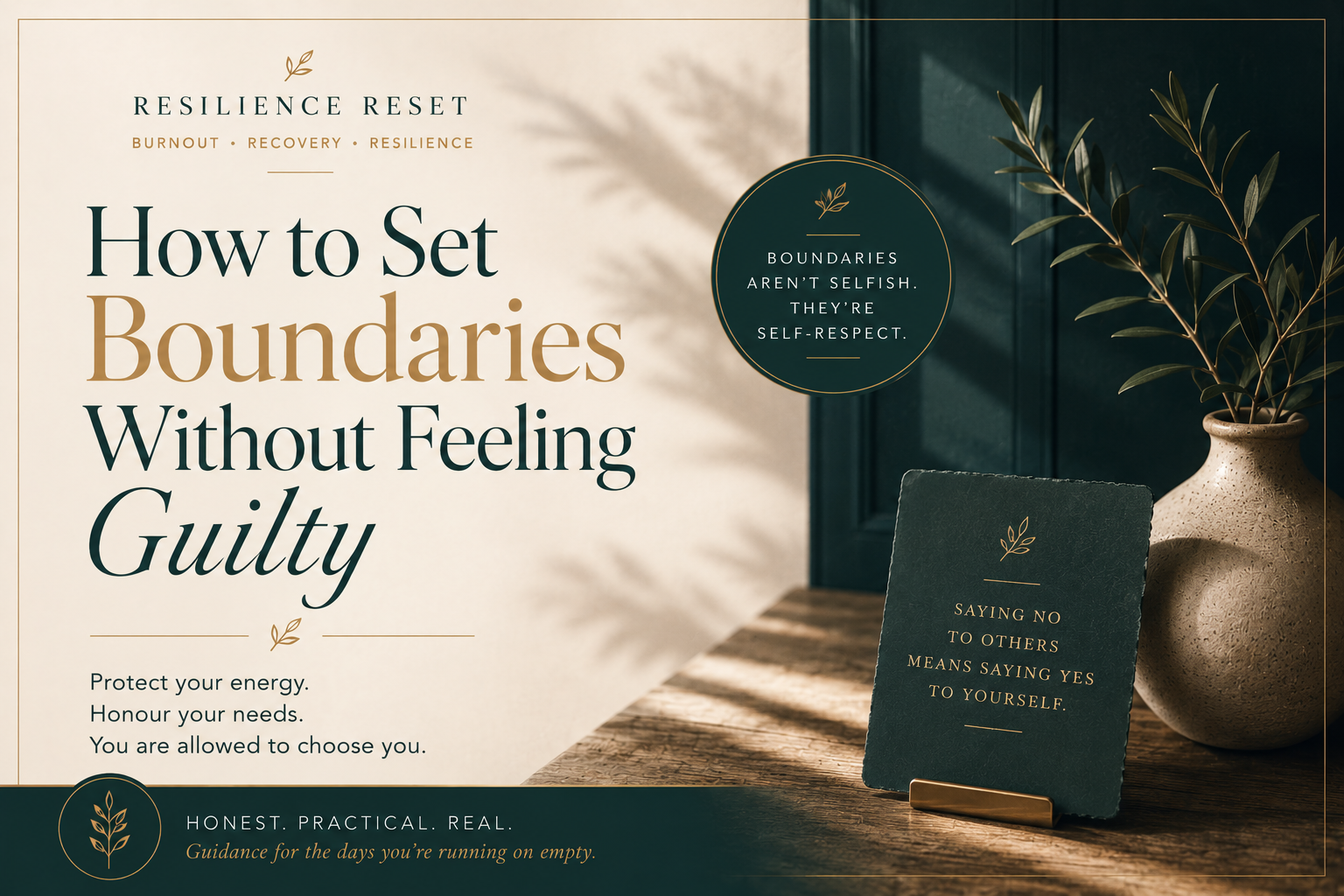
How to Set Boundaries Without Feeling Guilty
Why saying no feels uncomfortable, and how to communicate capacity limits clearly and professionally at work and home.
You know you need to say no.
Then someone asks.
And somehow you hear yourself saying, “Of course. No problem.”
Meanwhile, every part of you is screaming, I absolutely do not have time for this.
Learning how to set boundaries without feeling guilty can be one of the hardest parts of burnout recovery.
Especially if you have spent years being the dependable one.
Why do boundaries feel selfish?
Many of us learn to associate being helpful with being good.
We become the person who stays late. The friend who always answers. The family member who sorts everything out. The colleague who says yes.
Eventually, being needed can become part of our identity.
So when we start saying no, guilt appears.
But having a boundary does not mean you do not care. It means you recognise that your time and energy are limited.
Stop over-explaining
“No” often turns into a five-minute apology.
You do not always need one.
Try:
“I can’t take that on this week.”
Or:
“I’m not available then.”
Or:
“I can help, but it would need to be next week.”
Clear. Respectful. Done.
Give yourself time before answering
If you automatically say yes, stop answering immediately.
Use:
“Let me check and come back to you.”
That tiny pause gives you an opportunity to ask whether you genuinely have capacity.
Remember what you are saying yes to
Every yes has a cost.
If you say yes to another two hours of work, what are you saying no to?
Rest? Family? Exercise? Sleep? Your own priorities?
Boundaries are not only about what you reject. They are about protecting what matters.
Expect some discomfort
Setting healthier boundaries does not necessarily feel comfortable immediately.
You may worry that someone is annoyed. You may feel selfish. You may want to send another message explaining yourself.
Give it time.
A new boundary can feel uncomfortable simply because it is new.
Boundaries are part of sustainable resilience
Resilience is not about being endlessly accommodating.
It is about adapting in ways that allow you to keep going without constantly running yourself into the ground.
You are allowed to have limits. You are allowed to protect your time.
And you do not need to wait until you are completely burned out before deciding that your capacity matters too.